

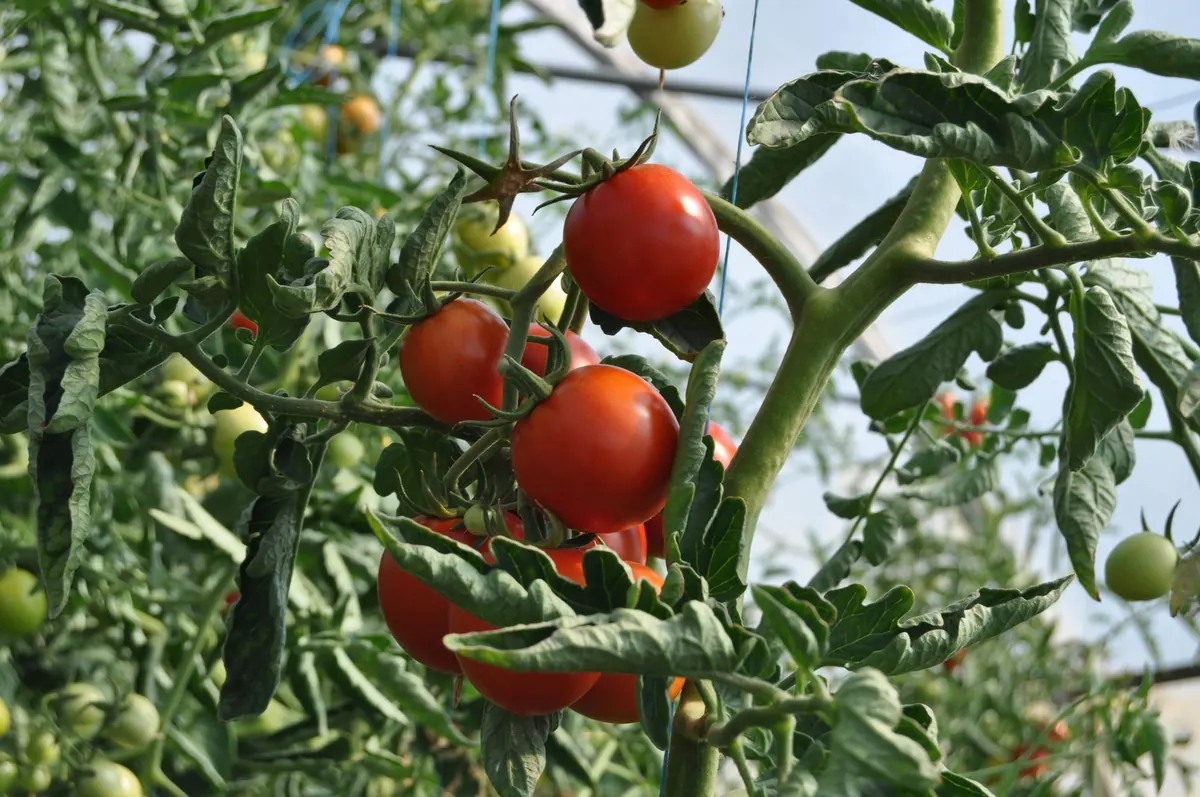
There is a point in late July when the first truss in the greenhouse shifts from dull green to deep red, and every fiddly job you did back in March suddenly makes sense. Glass gives tomatoes what the British climate rarely offers: warmth, shelter, a longer season and protection from blight. In return it asks for a routine. Water, feed, tie in, ventilate. Get those four things roughly right and a single growbag will keep you in salad tomatoes from midsummer well into autumn.
Pick the right varieties first
Almost all greenhouse tomatoes are cordon (indeterminate) types, which grow as a single tall stem and need support. Bush or determinate varieties stay compact and are better suited to pots, hanging baskets or a sunny patio. For a first season, choose a cordon you can trust: 'Alicante' and 'Moneymaker' are reliable croppers, 'Gardener's Delight' gives heavy trusses of small, sweet cherries, and 'Shirley' performs well in the cooler, shadier end of a greenhouse.
If you are growing in growbags, where root room is limited, grafted plants are worth the extra cost. They have a vigorous rootstock and cope far better with the stop-start watering that bags are prone to.
When to sow
Tomatoes need warmth to germinate, so start them somewhere consistently warm rather than on a cold windowsill.
- Late February to mid-March: sow indoors, in a heated propagator or a warm room, at around 18–21°C.
- Sowing depth: about 1cm, in moist seed compost. Germination usually takes 7–14 days.
- Pricking out: move seedlings into individual 9cm pots as soon as the first true leaves appear.
- Potting on: shift into 2-litre pots when roots fill the smaller pot, burying the stem slightly deeper.
- Planting into the greenhouse: late April to mid-May, once night temperatures stay above about 10°C.
A second sowing in late May, using a bush variety, will crop into October if you can keep the greenhouse frost-free. Sow more than you need and keep the sturdiest plants — leggy, pale seedlings rarely catch up.
Planting into the greenhouse
Growbags are the simplest option. Cut drainage slits in the base, stand the bag on a plank or a sheet of polystyrene so the roots are not sitting on cold concrete, and plant two tomatoes per bag. Sinking a bottomless pot or a plastic ring into the compost makes watering far easier, because the water goes down to the roots instead of running off the surface.
If you have a border, dig in plenty of garden compost and a handful of slow-release tomato feed, then space plants 45–60cm apart. Avoid growing tomatoes in the same border soil year after year, as soil-borne diseases build up. Water the plants in well and shade them with a sheet of newspaper for a few days while they settle. Give each one a cane or a length of string tied to a wire near the roof.
Cordon training and side-shooting
A cordon tomato wants to make one tall stem. Left alone, it will branch into a sprawling bush that shades its own fruit and ripens slowly. The fix is simple: every week, look in the join between a leaf and the main stem — the leaf axil — and pinch out any small shoot growing there while it is still thumb-sized. Do this in the morning, when plants are full of water and the shoots snap off cleanly.
Tie the stem to its support with soft string, using a loose figure-of-eight so the string does not cut into the plant as it thickens. Once five or six trusses have set fruit, or by late August at the latest, pinch out the growing tip two leaves above the top truss. That stops the plant making new flowers it cannot ripen and pushes its energy into the fruit you already have.
Help the flowers set
In still, humid air, tomato flowers often fail to pollinate and simply drop off. Tap the cane or the truss gently at midday, or stroke each open flower with a soft paintbrush. Ventilate on warm days: pollen becomes less viable above roughly 27°C, and stagnant damp air encourages botrytis. Water in the morning rather than the evening, and keep some airflow moving through the house.
Watering and feeding
Consistency matters more than quantity. In a growbag in July, that often means watering once or twice a day; in a border, it may be every other day. Always water the compost, never the leaves, and check by pushing a finger in — if it is dry 2cm down, water.
Irregular watering is the usual cause of blossom end rot, the leathery brown patch on the base of the fruit. It is a calcium uptake problem rather than a shortage of calcium in the compost, and steady watering is the cure. Feed with a high-potash tomato fertiliser once a week from the moment the first truss sets, and twice a week at the strength on the bottle by late July. Too much nitrogen gives you lush leaves and few tomatoes. Yellowing between the veins, meanwhile, usually points to magnesium shortage, and an occasional Epsom salt feed at the recommended dilution will help.
Ripening the crop in a British summer
By late August, snip off the leaves directly shading the trusses so the fruit catches the light. Keep feeding until the last fruits colour, then ease off the watering slightly as they ripen — a little less water concentrates flavour and reduces splitting.
Any green tomatoes left at the end of the season need not be wasted. Ripen them on a sunny windowsill, or in a paper-lined drawer with a ripe banana or apple, which releases ethylene and speeds the process. Check them daily and remove any that start to rot. Green ones that refuse to turn make excellent chutney. If you can keep the greenhouse just above freezing, a few late trusses will keep ripening into October.
Keeping on top of it
Ten minutes a week is enough for most of the season: pinch out side shoots, tie in the stem, and pick off any yellowing leaves below the lowest truss. Then once a day, glance at the plants while you water. Yellow sticky traps deal with whitefly, damping down the paths on hot days deters red spider mite, and grey furry patches on stems mean the air is too damp. Deal with small problems early and the greenhouse will reward you with its own quiet, steady supply of tomatoes — far better than anything the supermarket can offer.
Photo: erkan budak / Pexels